The answer — one pick, priced
Get the
Anker Nebula X1
no budget ceiling
The most capable move-anywhere 4K — 3,500 ANSI lumens of triple laser plus an auto-align gimbal that keystones, focuses and levels in one click.

Fit ledger — need → measured evidence
■ The catch — co-equal billing, always
You are paying a premium for the gimbal. At ~$2,499 the Nebula X1 costs as much as a dedicated home-theater projector, and in a fixed dark room a standard-throw pick gives a better image per dollar. The auto-align portability is the whole reason to buy it — if it never moves, you are overpaying.
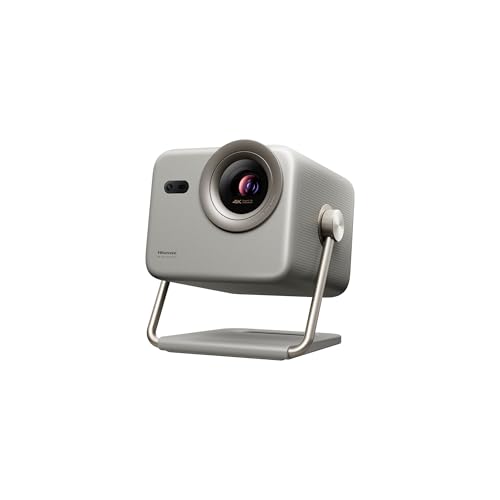
Dealbreaker? Runner-up №1 (Hisense C2 Ultra) is a brighter fixed all-in-one for $200 less ↓
■ Every product has a catch. Verdicts that hide it are how bad buys happen.
Runners-up — if your needs differ


Adjacent verdicts — same method
Traps — this verdict avoids
The native-4K tax
True native 4K panels start at ~$5,999 (Sony VPL-XW5000ES). Every serious sub-$4,000 projector uses pixel-shifting — which reviewers rate indistinguishable from native at normal viewing distances. Paying for native is a luxury, not a necessity.
The screen you forgot to budget
The picture is only as good as the surface. A $2,000 projector on a painted wall looks worse than a $1,000 one on a real screen — budget $200-$500 for a standard screen, and $500-$3,000 for the ALR screen a UST model requires.
The brightness and HDR ceiling
No consumer projector exceeds ~3,000 nits peak, and HDR is limited versus a TV. Match lumens to the room: a dark theater needs far fewer than a sunlit living room, so buying on lumens alone picks the wrong projector.
Provenance — 9 sources, dated
Winners are picked from the full research dossier at knowledgelib.io. Prices, stock and listings are re-verified monthly.