The answer — one pick, priced
Get the
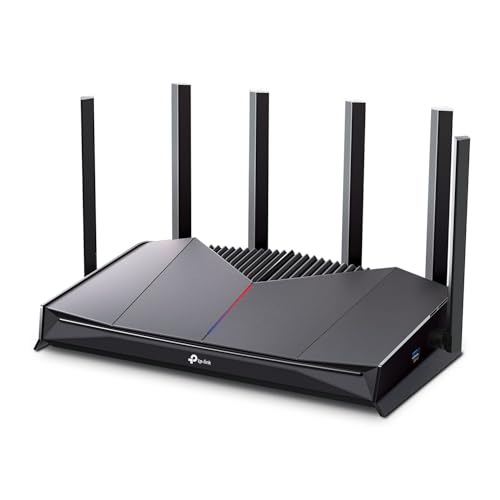
TP‑Link Archer BE9700
$20 under your budget
The best value pick in gaming Wi-Fi 7 — full tri-band 6 GHz, a 10G port, and QoS that delivers 12-17ms in-game latency for a fraction of flagship cost.

Some links earn us a commission — it never changes the pick. Winners are chosen before payouts are checked.
Fit ledger — need → measured evidence
■ The catch — co-equal billing, always
There's no dedicated gaming port. You get game-traffic QoS, but not the auto-prioritizing labeled gaming jack or the WTFast / Gear Acceleration software stack that TP-Link's purpose-built gaming routers add.
Dealbreaker? The Archer GE650 adds the full gaming stack for ~$40 more ↓
■ Every product has a catch. Verdicts that hide it are how bad buys happen.
Runners-up — if your needs differ


Adjacent verdicts — same method
Traps — this verdict avoids
Dual-band 'Wi-Fi 7' misses the point
The gaming win is the 6 GHz band plus MLO — a clean, interference-free lane. Dual-band Wi-Fi 7 routers like the Archer GE400 have no 6 GHz band at all and forfeit most of the latency advantage you're paying for.
Your device has to speak Wi-Fi 7
Sub-5ms claims and dedicated-gaming-port QoS only reach a wired client or a Wi-Fi 7 device on 6 GHz. A Wi-Fi 6/6E laptop or phone can't use 320 MHz channels or MLO, so the router's headline gains never arrive.
A router can't fix your ping
QoS and gaming ports only optimize the local hop and traffic priority. They do nothing for server-side or last-mile ISP latency — if your ping is high because of your ISP or the game server, no router lowers it.
Provenance — 8 sources, dated
Winners are picked before affiliate payouts are checked, from the full research dossier at knowledgelib.io. Prices, stock and listings are re-verified monthly by an automated pipeline. Some links earn us a commission — it never changes the pick, and we say so here rather than in a footer you'd never read.