The answer — one pick, priced
Get the
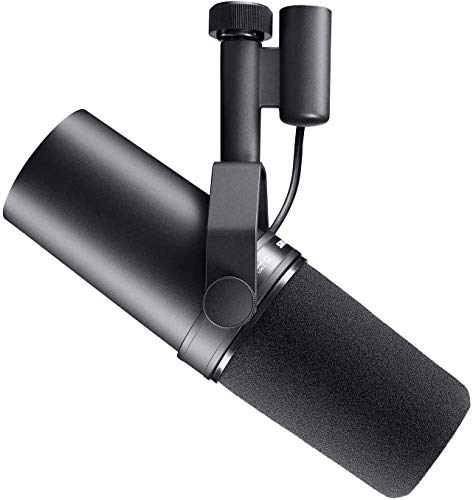
Electro‑Voice RE320
no budget ceiling
Variable-D keeps guests consistent even as they drift off-axis — the interview mic the SM7B isn't, with a dual-voicing switch that doubles it as a kick-drum mic.

Some links earn us a commission — it never changes the pick. Winners are chosen before payouts are checked.
Fit ledger — need → measured evidence
■ The catch — co-equal billing, always
You're buying two, and each still needs gain. A two-person show means a matched pair — roughly $530 in mics before interfaces — and the RE320 is a low-output dynamic that wants a clean, high-gain preamp on every channel.
Dealbreaker? Runner-up №2 (BP40) drives any interface — no Cloudlifter per channel ↓
■ Every product has a catch. Verdicts that hide it are how bad buys happen.
Runners-up — if your needs differ


Adjacent verdicts — same method
Traps — this verdict avoids
The Cloudlifter tax
Low-output dynamics (SM7B, RE20, PR-40, Procaster) need 60 dB+ of clean gain, but budget interfaces like the Focusrite Scarlett Solo give only 40–50 dB — you'll hear hiss until you bolt on a Cloudlifter (~$149) or FetHead (~$84), or pick a high-output mic instead.
The mic is a third of the rig
An XLR mic can't record on its own. A first-podcast setup is mic + interface ($100–$200) + XLR cable + boom arm + pop filter — budget for the whole chain, not just the headline number.
Condensers punish untreated rooms
Condenser mics need +48V phantom power and a treated room — they capture far more reflections, fans, and keyboard clatter than dynamics. In an untreated home office, a dynamic mic is the safe default.
Provenance — 7 sources, dated
Winners are picked before affiliate payouts are checked, from the full research dossier at knowledgelib.io. Prices, stock and listings are re-verified monthly by an automated pipeline. Some links earn us a commission — it never changes the pick, and we say so here rather than in a footer you'd never read.